

Tree of the future
The Tree of the Future did not arrive as an idea, but as an intrusion. It stands planted in the middle of the street—vast, artificial, and unmistakably wrong—yet no one seems to notice. Beneath it, people move as if sleepwalking, accustomed to an ugliness that has become invisible through repetition. This image is not an accusation, but a mourning: for imagination stripped of feeling, for individuality softened into uniformity, and for a civilisation that has mistaken survival for living.
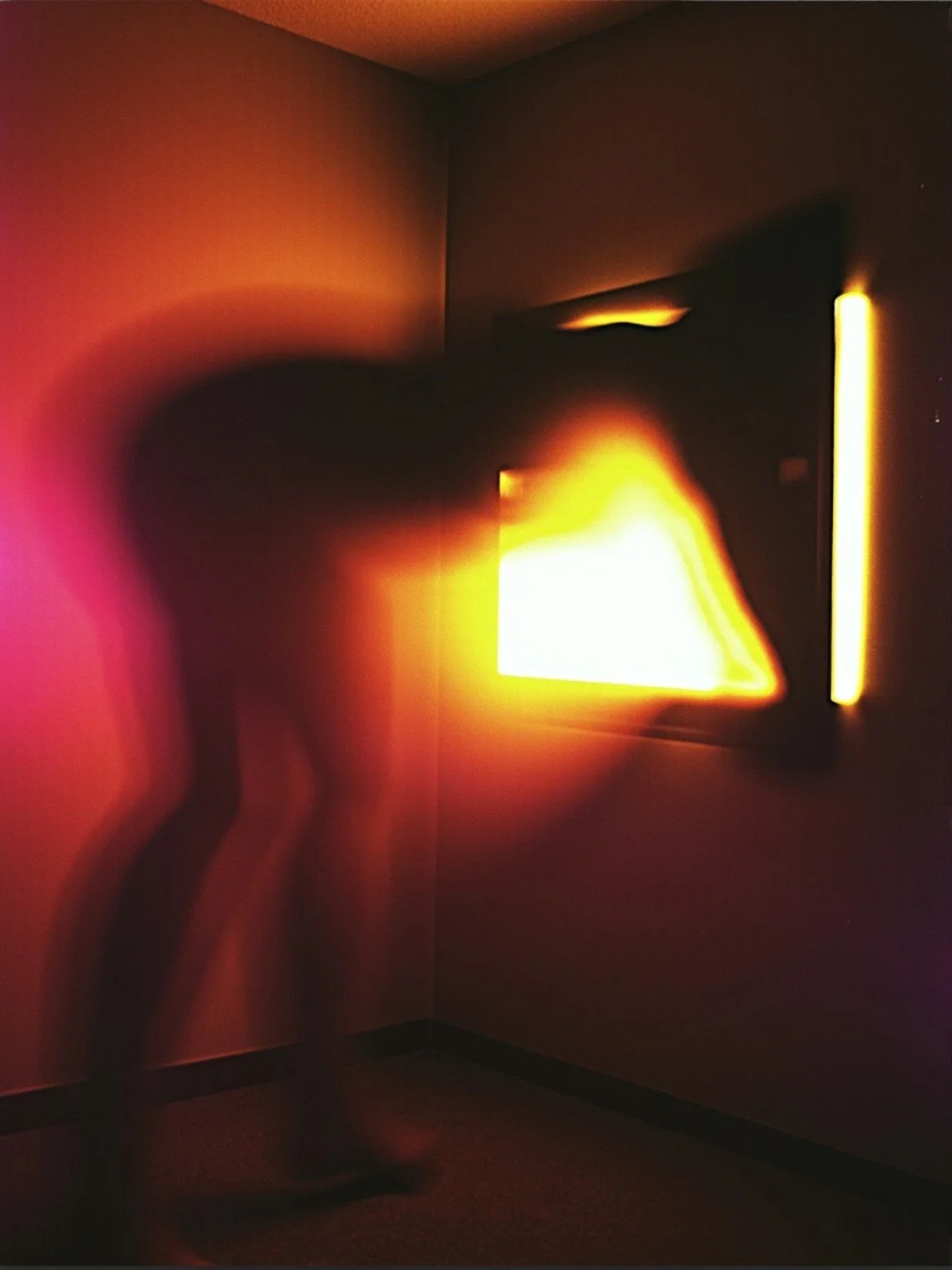
The Flatness of Exoteric De-illumination
A meditation on the loss of inner illumination in modern life. This essay explores exoteric flatness, the severing of inner worlds, and the gradual de-illumination of imagination, drawing on esoteric perception, childhood vision, and the condition of a world lived entirely on the surface.
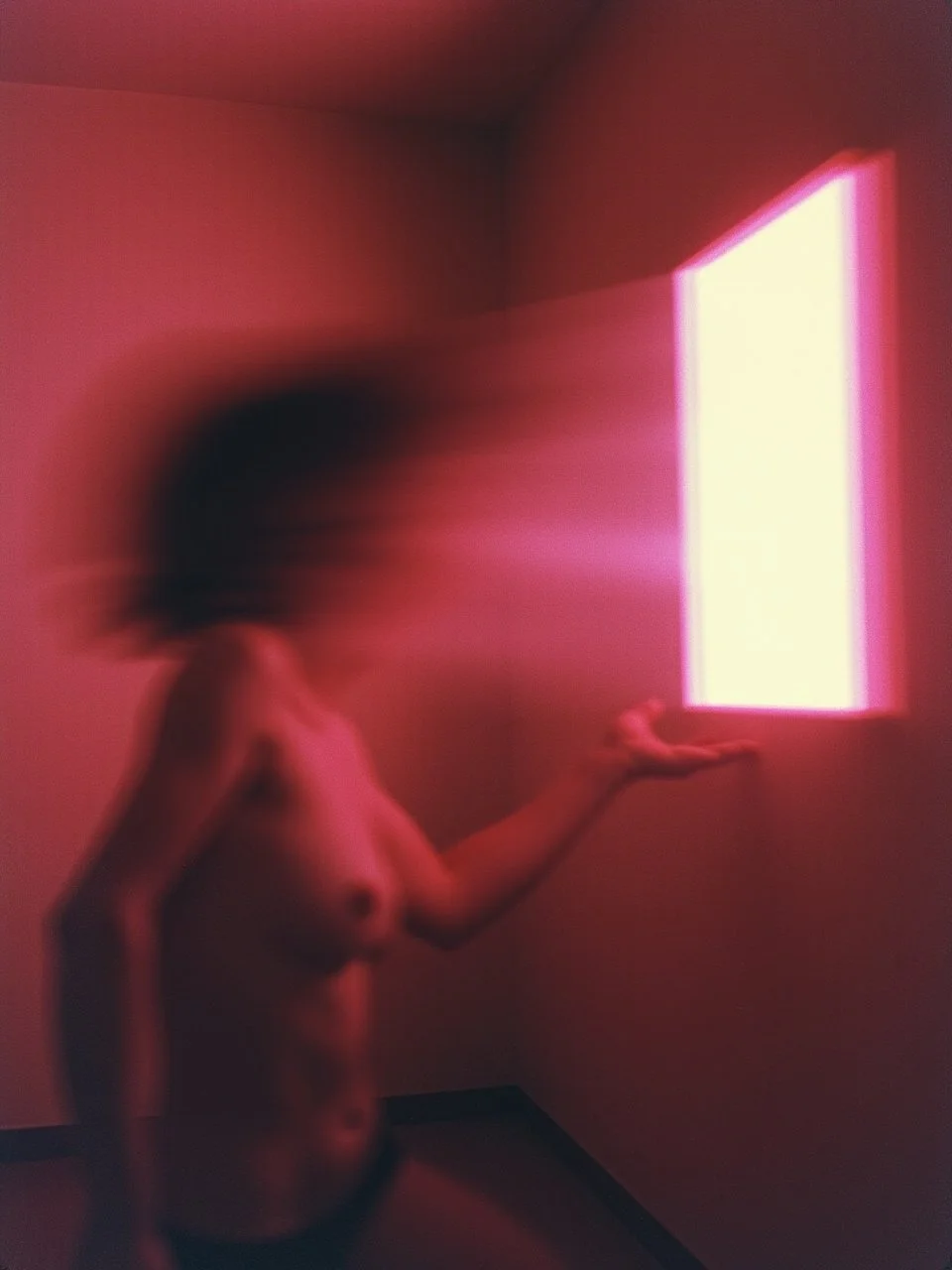
Falling into the exoteric light
This photograph is not about screens or technology alone. It is about a quiet drift — a gradual movement away from inner substance and toward an exterior world that has become loud, saturated, and strangely hollow. The figure does not struggle against the light; it yields to it. And in that calm surrender lies the deeper question of our age: at what point does participation in the world become a form of disappearance?
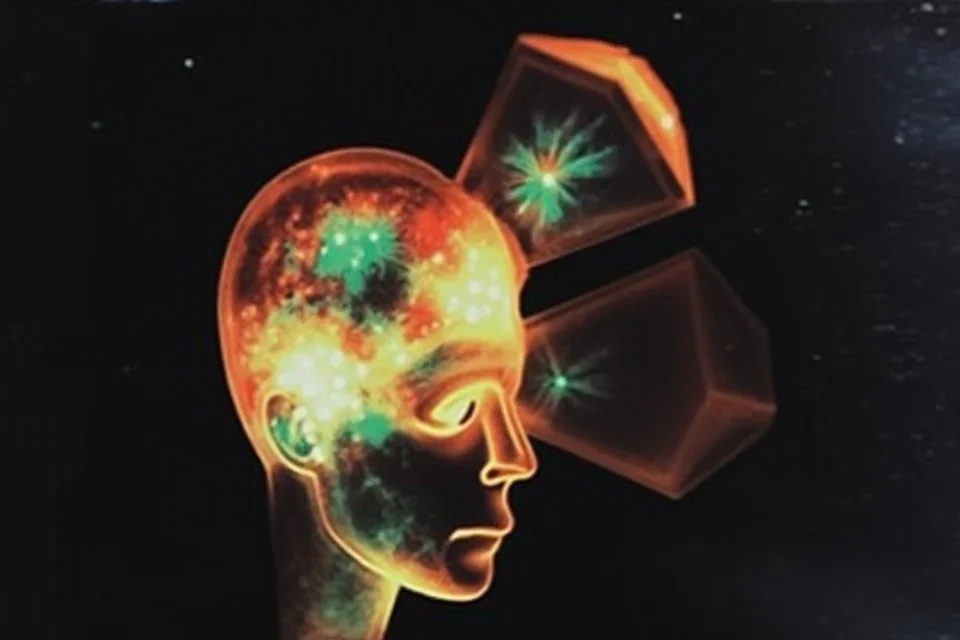
Etheric Luciferic Vision
This image did not arrive as an artwork, but as a residue of vision — a trace left behind by prolonged inner observation. It exists in a liminal state, somewhere between illumination and concealment, where light behaves like memory rather than exposure. The figure is not a body, but a threshold: perception opened, hollowed, and allowed to look inward upon itself. What emerges is an etheric architecture — neither symbolic nor mechanical — briefly stabilised within darkness, as if something forbidden has been quietly remembered rather than discovered.
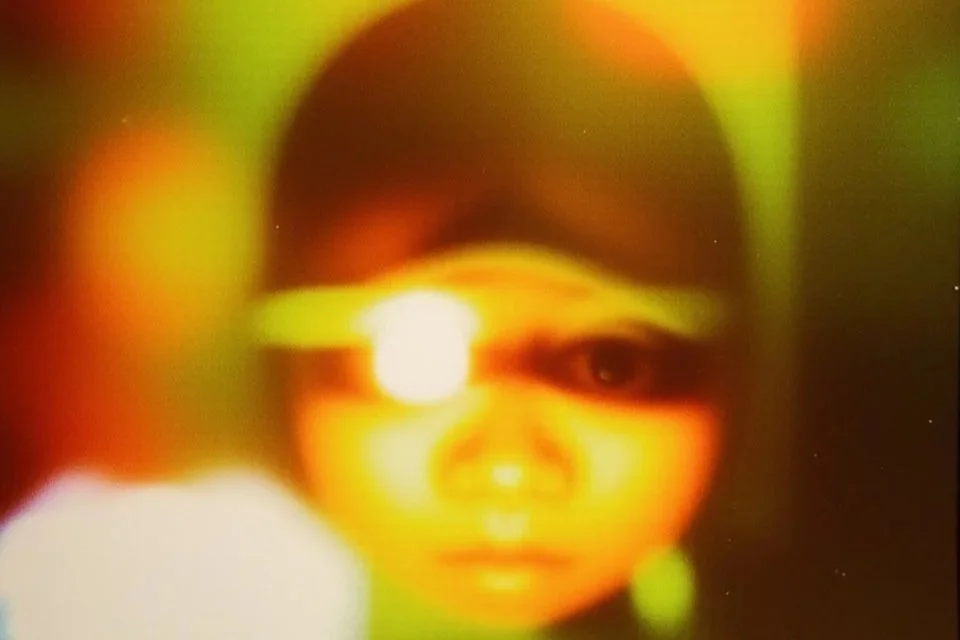
A selfie gone wrong.
The image did not arrive by intention, but through play. An anomaly produced by a ludic process, where control loosened just enough for something unfamiliar to surface. It feels like a selfie gone wrong — not a failure of technique, but a rupture in self-presentation itself. Light overwhelms structure, identity destabilises, and something usually kept hidden presses briefly into view. The photograph does not explain itself. It asks what happens when we stop turning away from the void.

Nothing Beyond the Glass
The photograph appears to document an exhibition.
Objects contained behind glass, lit from above, presented without explanation. Rounded faces hold expressions that resemble smiles only because we have learned to read them that way. The image does not accuse or satirise. It simply records a moment where visibility replaces vulnerability, and where the self is reduced to a carefully managed surface — preserved, displayed, and politely kept at a distance.
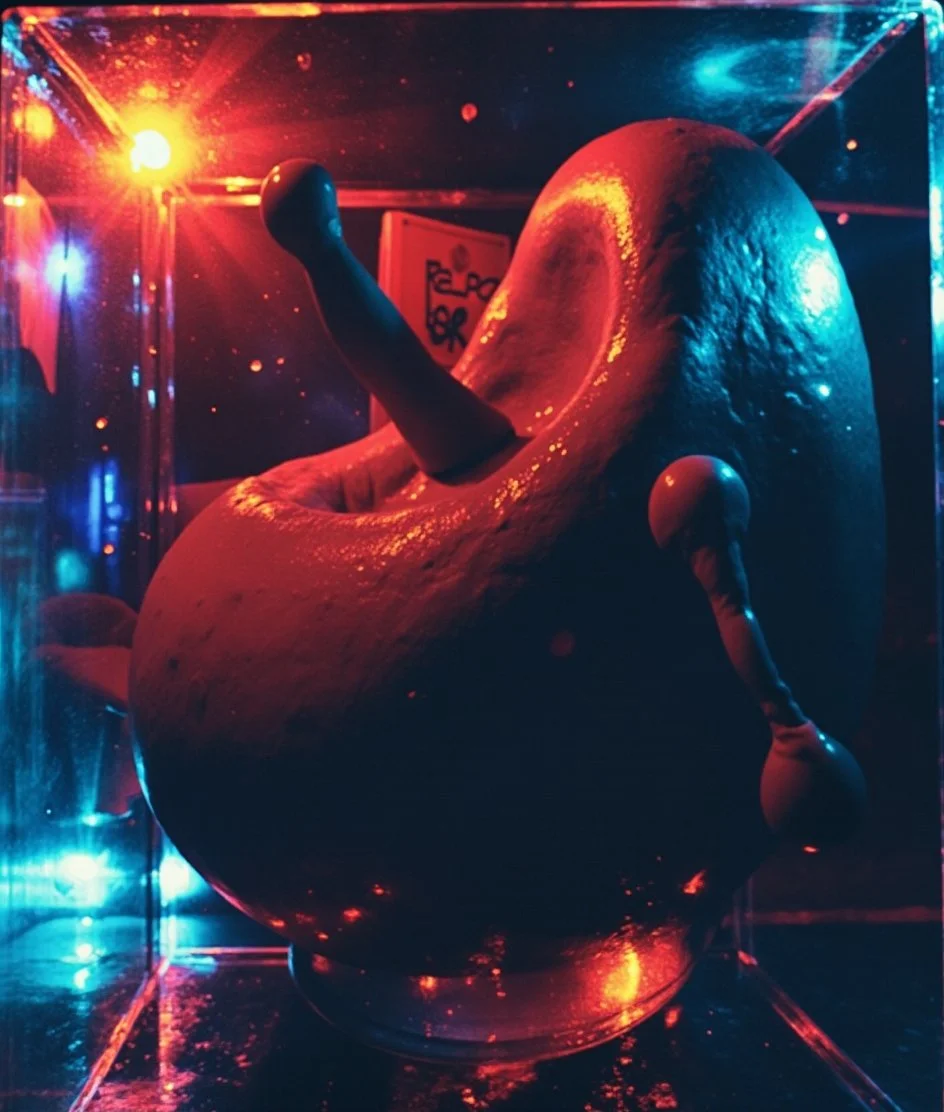
Abomination in a tank
This post explores the image Abomination in a Tank as a meditation on containment, creative deprivation, and the quiet harm that occurs when expression is denied space to exist. It reflects on isolation, authorship, and the necessity of creativity as a fundamental human nourishment — not a luxury, but a means of survival.

A Deep Puddle — A Noetograph
This work presents a liminal scene suspended between surface noise and inner depth. Rather than recording external light, the image operates as a Noetograph — an interior imprint formed through imagination, pressure, and inner perception. What appears shallow at first glance quietly opens into something heavier, slower, and unresolved. The image is not an illustration of an idea, but an encounter with an inner state made visible.

