I love to peer through the veil via imagination and explore visions through art and illustration.
Latest Posts
Romeria is an unfolding world revealed through image rather than explanation. These artworks form part of a developing book, exploring myth, ritual, chaos, and the sacred feminine through intuitive, AI-assisted visual creation.
The world of Romeria has begun to take form. What was once held only in vision and imagination is now developing through writing, illustration, map-making, and world-building, all unfolding together. The book is emerging as a collection of interwoven short stories, myths, folklore, and darker fragments, with Romeria moving through them as both creator and presence. This blog documents the early stages of that process — the point where ideas become scenes, images become places, and a world begins to reveal itself.
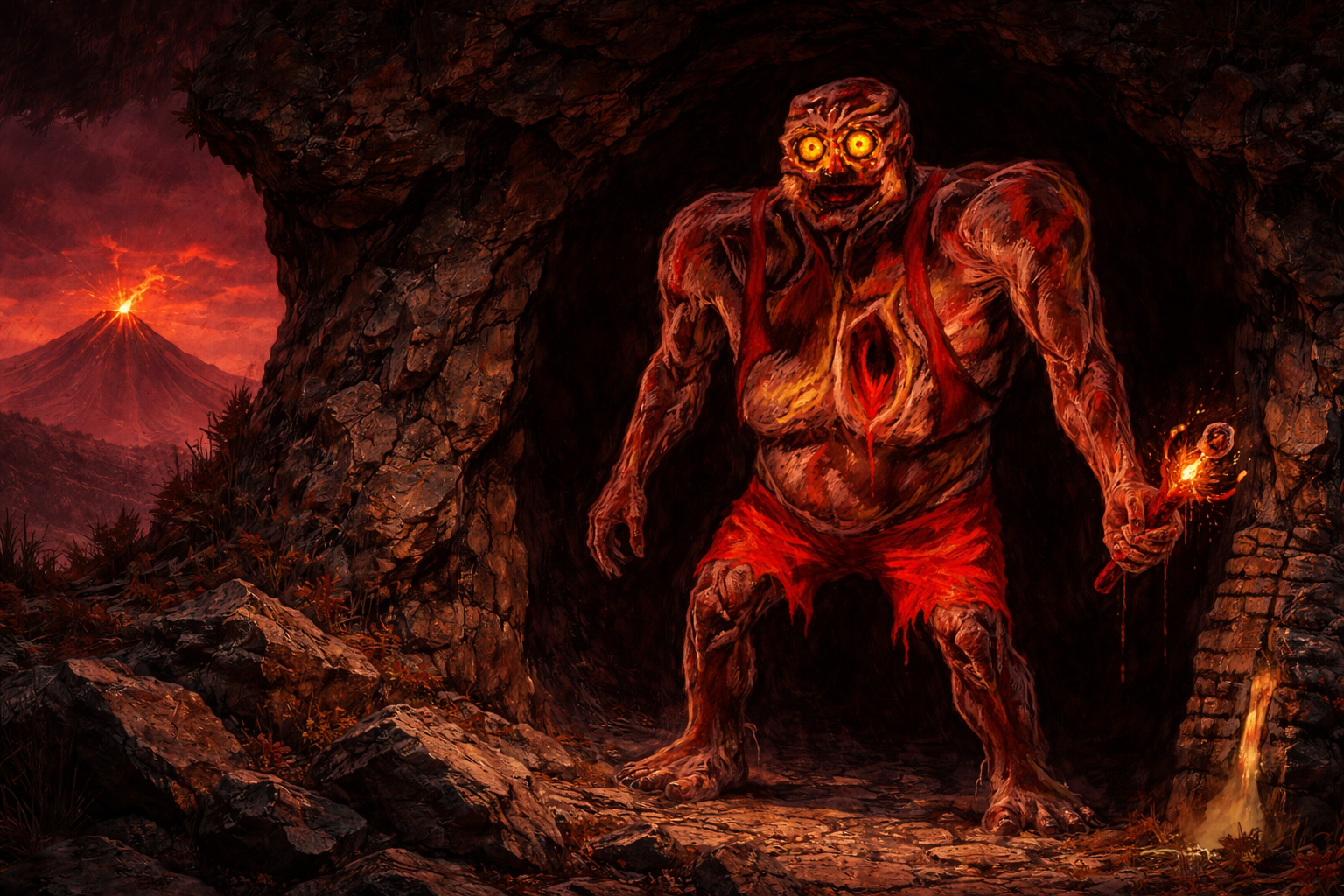
A vision of a giant standing in the way — awkward, obstructive, glowing-eyed, and shaped by forces beyond his understanding. This post explores one of the giants of Romeria and how visions, imagination, and worldbuilding continue to bring the realm into being.
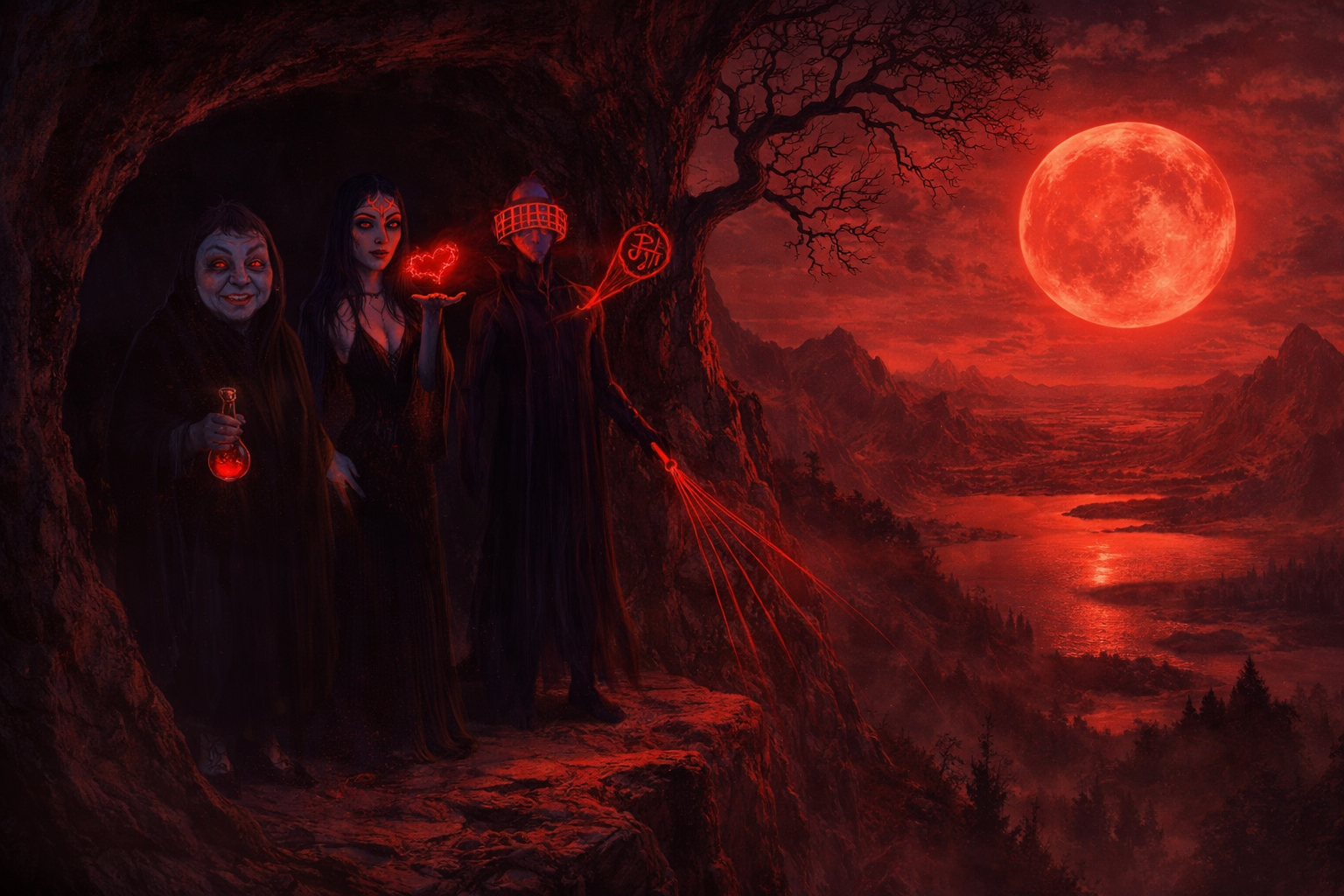
In the red depths of Romeria, there are places that were never meant to be mapped. Caves where the air hums faintly, cliffs where songs drift without a source, and pools of crimson light that ripple even when untouched. It is here that the Terrible Trio are said to dwell — not as rulers or gods, but as forces that alter those who encounter them.
Alchemy, desire, and forbidden knowledge take form through these three presences, leaving behind stories that contradict one another and travellers who never return unchanged.
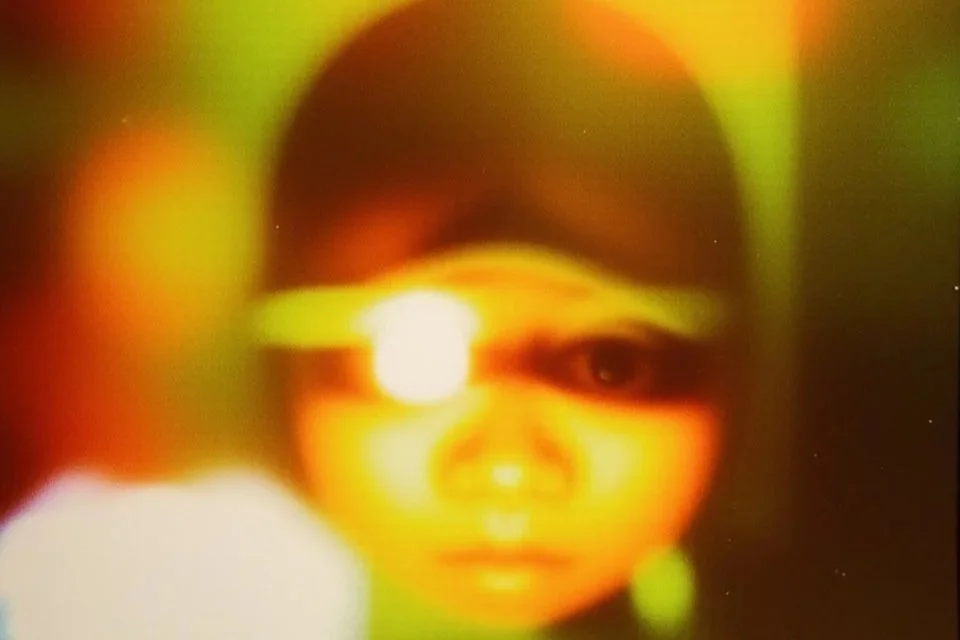
The image did not arrive by intention, but through play. An anomaly produced by a ludic process, where control loosened just enough for something unfamiliar to surface. It feels like a selfie gone wrong — not a failure of technique, but a rupture in self-presentation itself. Light overwhelms structure, identity destabilises, and something usually kept hidden presses briefly into view. The photograph does not explain itself. It asks what happens when we stop turning away from the void.
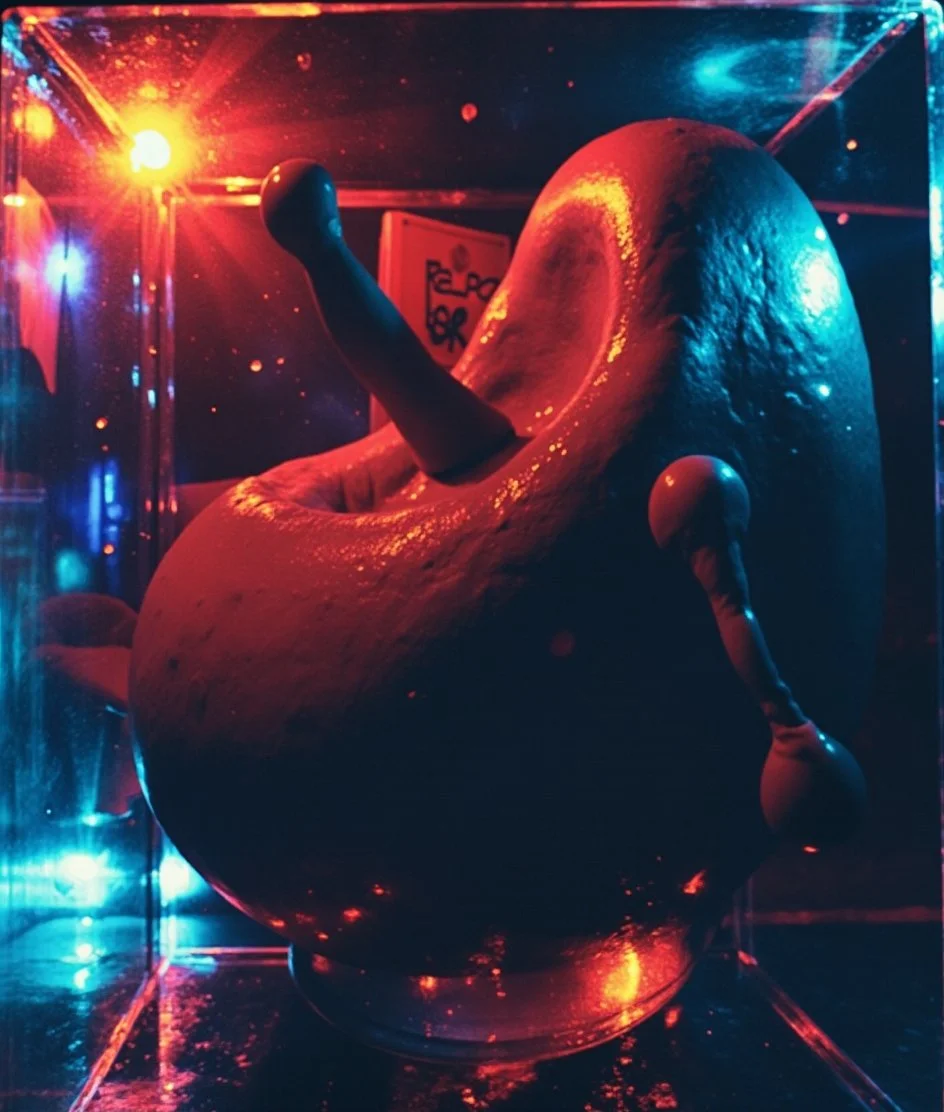
The photograph appears to document an exhibition.
Objects contained behind glass, lit from above, presented without explanation. Rounded faces hold expressions that resemble smiles only because we have learned to read them that way. The image does not accuse or satirise. It simply records a moment where visibility replaces vulnerability, and where the self is reduced to a carefully managed surface — preserved, displayed, and politely kept at a distance.
This post explores the image Abomination in a Tank as a meditation on containment, creative deprivation, and the quiet harm that occurs when expression is denied space to exist. It reflects on isolation, authorship, and the necessity of creativity as a fundamental human nourishment — not a luxury, but a means of survival.