
On Gnosis, the Daemonic, and Inner Vision
I. On the Purpose of VEIL
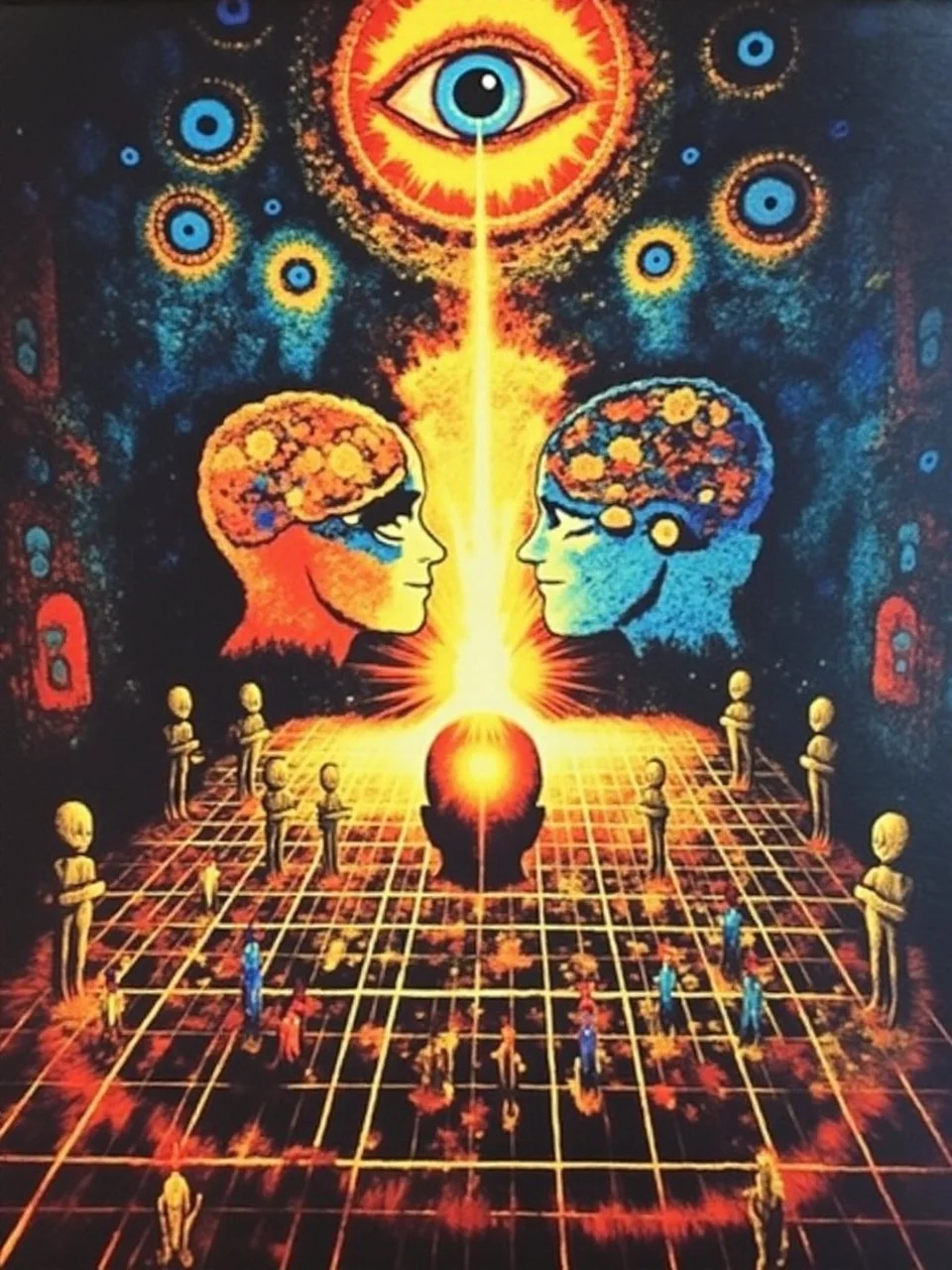
VEIL exists as a space for inner exploration — not as doctrine, instruction, or revelation, but as record. It is a place where visions, symbols, and esoteric impressions are examined as they arise within consciousness itself. What is written here does not seek to persuade or enlighten others, but to articulate a personal engagement with gnosis as it is lived and experienced. VEIL is concerned with how the inner world speaks, not with enforcing what it says.
The visions that inform this work are not sought for spectacle, nor do they arrive as disturbances. They are luminous, euphoric, and often shadowed impressions that move persistently through the imagination. When I describe them as a kind of plague, I do so with affection rather than alarm — they are insistent, unavoidable, and illuminating, demanding attention rather than belief. VEIL provides a place where these inner events can be translated into image, language, and reflection.
This is not an attempt to build a system or revive an ancient order. It follows instead the tradition of thinkers and artists who turned inward to map their own underworlds, using vision as material rather than truth. Through art, symbolism, and writing, I attempt to decode my own way of seeing the world — not to resolve it, but to better understand its structure, contradictions, and beauty.
VEIL is not intended for the many, nor does it position itself against them. It simply acknowledges that modern life is often hostile to depth. In a culture devoted to convenience, consumption, and surface meaning, inner inquiry is quietly discouraged. Gnosis destabilises identity, bypasses authority, and resists simplification. For this reason, it is often avoided, aestheticised, or rendered harmless. VEIL exists beyond that threshold of ease.
What appears here may be unresolved, contradictory, or deliberately unstable. That instability is part of the work. Meaning is not delivered; it is approached. Readers are free to take from VEIL whatever resonates and to leave the rest untouched. Nothing here asks for belief. It merely records what passes through the veil of consciousness, as faithfully and honestly as possible.
II. On the Daemonic, Projection, and Inner Light
Much of what is feared in the occult has less to do with the unknown than with projection. Throughout history, human distress, mental illness, and existential collapse have often been misnamed as possession. When a person unravels — when behaviour becomes erratic, hygiene collapses, or identity fractures — society frequently reaches for myth rather than care. The wounded individual is recast as dangerous, corrupted, or inhabited by an external force, and compassion is replaced by suspicion.
What is often described as demonic power is, in reality, a tragic human response to sustained neglect and despair. When dignity is stripped away and a person is vilified, the body can enter a feral state of survival. Strength, agitation, and loss of inhibition are misinterpreted as supernatural, when they are the last expressions of a psyche pushed beyond its limits. To name such suffering as possession does not heal — it condemns.
Religious institutions have historically intensified this harm by framing inner crisis as sin or evil. When individuals are told that their distress signifies moral corruption or malignant influence, they are taught to distrust their own inner signals and surrender agency in exchange for acceptance. Certain evangelical practices — public deliverance, shaking, falling, and convulsing — function through psychological suggestion and emotional overload. These states are then interpreted as spiritual victory, while the individual’s inner sovereignty is quietly eroded.
Symbolically, this can be understood as a baptism into the collective ego rather than an awakening of the individual spark. The imagination is subdued, ambiguity is rejected, and conformity is rewarded. The inner world is treated as hostile territory to be eradicated rather than explored. Fear replaces curiosity. Obedience replaces understanding.
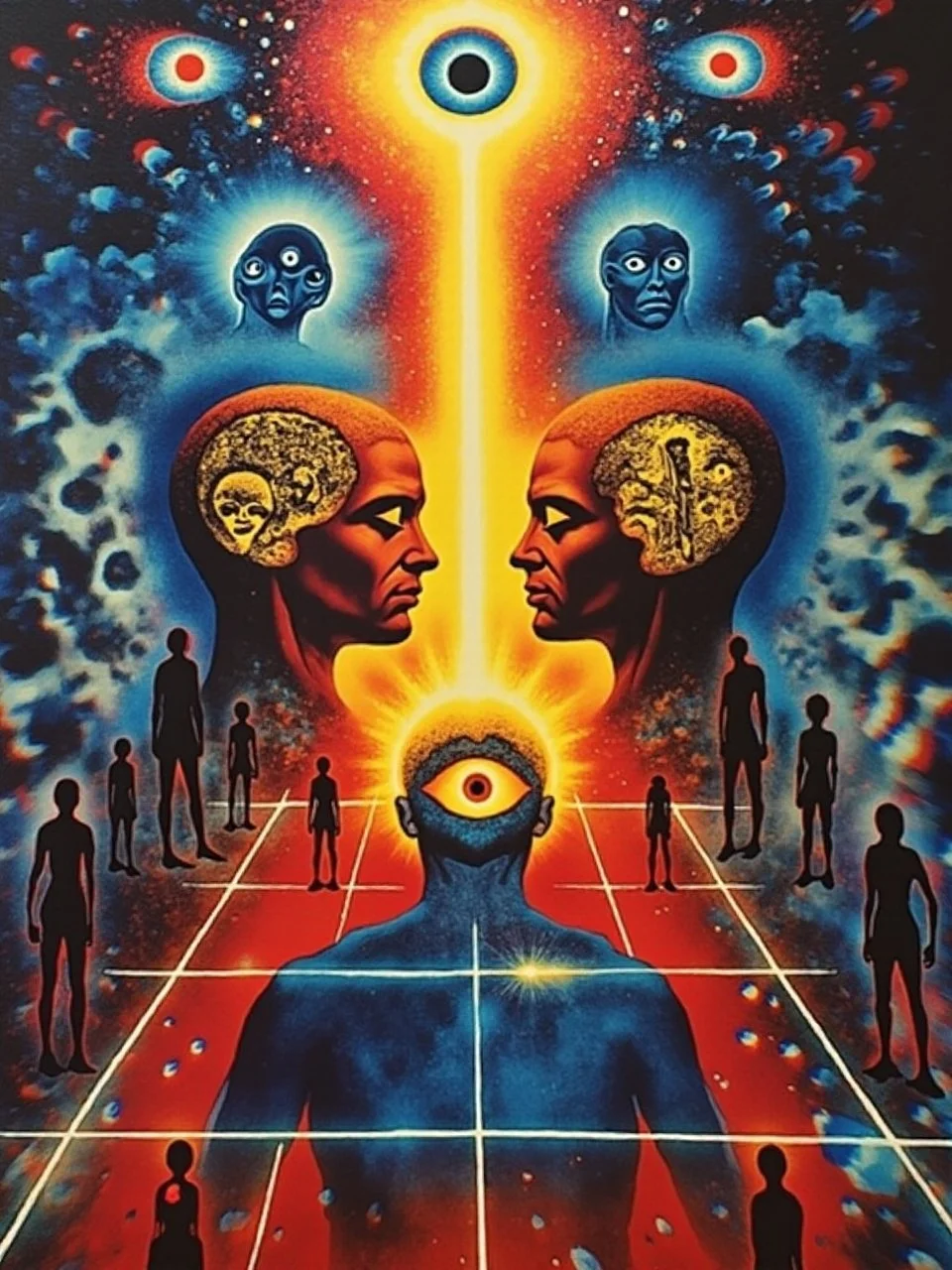
Within VEIL, the daemonic is approached differently. Daemons are not external monsters, nor moral adversaries, but symbolic and imaginal intelligences — concentrations of psychic energy that reside within the deeper strata of the human psyche. They inhabit the underworld of consciousness not as corrupters, but as carriers of shadowed insight, pressure, and transformation. To engage them requires steadiness, clarity of intent, and an orientation toward illumination rather than domination.
The occult, in its older and more honest sense, was never about terror or submission. It was about learning to dwell with complexity without losing one’s centre. Inner exploration demands a certain hygiene of the soul — compassion, grounding, and love — not righteousness or fear. What appears strange or unsettling does not equate to evil. Unfamiliar forms and uncanny symbols can be profoundly illuminating when approached without panic or projection.
VEIL does not deny the reality of suffering, nor does it romanticise collapse. It resists the dangerous habit of naming despair as evil and fear as truth. Illness is not possession. Difference is not corruption. And the forbidden is not inherently destructive. Where fear governs, minds decay. Where curiosity and care remain, even the darkest regions can yield understanding.